As operators move from deploying a handful of agents to creating TM Forum Autonomous Networks Level 4 processes, they face significant headwinds. To overcome these, they require a solid long-term plan, a clear understanding of the risks they face, and a technical and strategic roadmap.
Today, operators have live agents in production and a vision to move forward with autonomy; but we see them needing to take a five-stage journey:
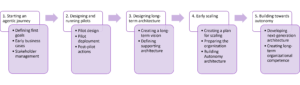
In the early stages, the roadmap resembles that of many other operator transformation programs: identify a strong initial use case, establish a credible business case, and define the capabilities and controls needed for deployment.
However, as organizations scale these agentic systems, they uncover a broad range of challenges and a chasm they must tackle before they can deliver the dynamic systems of next level autonomy.
What are their next moves?
Some of the early activities in Stage 4 should include:
Create a risk register. Managing risk stretches well beyond a decent agent harness and some additional governance. Track the risks, the proposed remedies and progress towards resolving them, with a senior owner accountable for keeping the whole picture in view.
Focus on the knowledge plane. The industry is in the early days of building suitable knowledge, and many questions remain: How do we build a suitable ontology? Do we need a single knowledge graph or will multiple smaller deployments support early requirements?
Work out where the money is. This is the difficult bit. A long-term business model should set realistic expectations for new revenue and address topics such as the expected decreases in token cost which are likely to be offset by the rise in tokens needed by agentic systems.
